
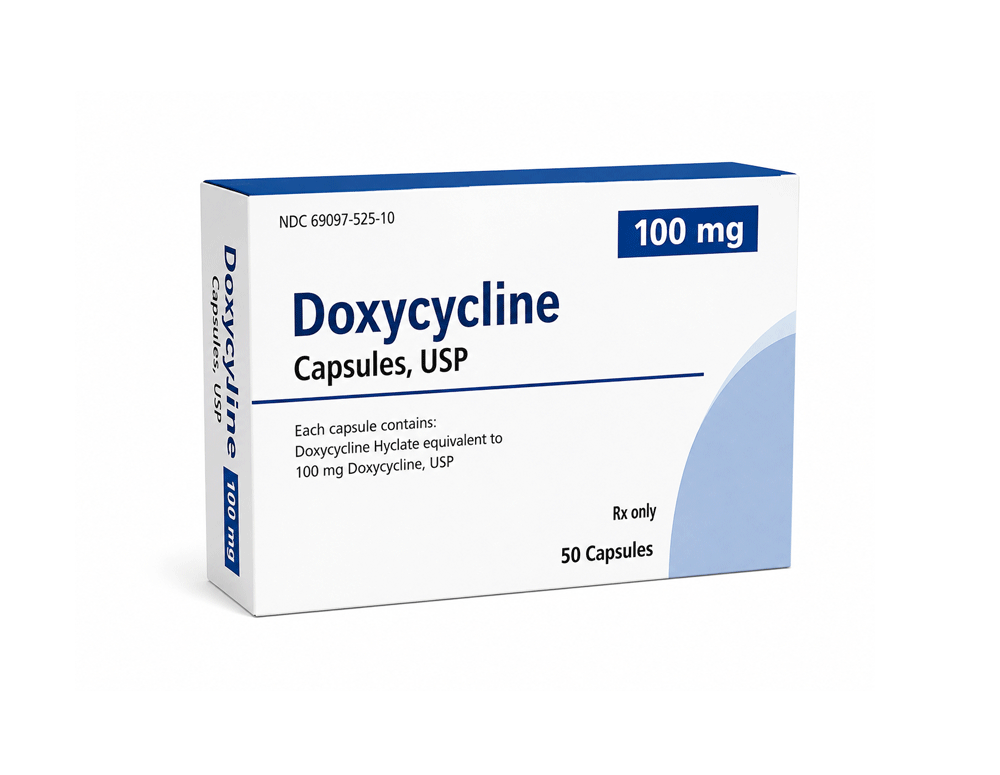
- Doxycycline - A Leading Oral Antibiotic for Acne, Rosacea, and Inflammatory Skin Conditions
- Where Is the Best Place to Buy Doxycycline Online?
- How Do Doxycycline Prices Compare and What Affects the Final Cost?
- What Should I Know about Using Doxycycline for Acne and Skin Inflammation?
- What Forms and Dosages of Doxycycline Are Available?
- What Are the Key Benefits and Advantages of Taking Doxycycline?
- How Does Doxycycline Compare to Other Antibiotics for Acne Treatment?
- How Long Does Doxycycline Treatment Usually Last and When Can Results Appear?
- What Is the Correct Way to Take Doxycycline and Plan a Treatment Course?
- What Should I Expect from a Full Doxycycline Treatment Course?
Doxycycline - A Leading Oral Antibiotic for Acne, Rosacea, and Inflammatory Skin Conditions
Doxycycline is a tetracycline-class oral antibiotic with a long-established role in dermatology, especially in acne vulgaris, papulopustular rosacea, perifollicular inflammation, and other disorders in which bacteria and immune signaling interact. Its clinical value does not depend only on antimicrobial activity. In inflammatory skin disease, doxycycline is widely used because it can reduce the activity of Cutibacterium acnes, decrease neutrophil-driven inflammation, and modulate inflammatory mediators that contribute to papules, pustules, redness, and tender lesions. This dual action explains why doxycycline remains one of the most recognized oral options when topical treatment alone is not sufficient or when lesions involve larger body areas such as the chest, back, shoulders, or jawline.
In acne, doxycycline is typically considered when inflammatory lesions are moderate to severe, when scarring risk is rising, or when repeated crops of painful papules and pustules continue despite topical therapy. In rosacea, its role differs slightly because subantimicrobial and anti-inflammatory dosing has particular relevance. That distinction matters: in some skin conditions, the therapeutic target is not eradication of infection but suppression of inflammation that drives visible symptoms. This is one reason doxycycline occupies a unique place among oral agents for facial redness with bumps, acneiform eruptions, and recurrent inflammatory flares.
Its popularity also relates to practical pharmacology. Doxycycline has good oral absorption, broad tissue penetration, and a dosing schedule that is often simpler than older tetracyclines. Compared with some alternatives, it may be easier to fit into a sustained treatment plan for skin disease, where therapy often extends over weeks rather than days. The medication has also been extensively studied, so its adverse effect profile, limitations, and comparative strengths are well characterized in routine dermatologic use.
- Tetracycline derivative with antibacterial and anti-inflammatory actions
- Commonly used in acne vulgaris, papulopustular rosacea, and inflammatory follicular disorders
- Often selected for moderate inflammatory acne involving face, trunk, or both
- May be prescribed in standard antimicrobial doses or lower anti-inflammatory doses depending on indication
- Known adverse effect pattern includes gastrointestinal irritation, photosensitivity, and esophageal irritation
Doxycycline is not a universal solution for every form of acne. Comedonal acne dominated by blackheads and whiteheads often responds better to retinoid-centered topical regimens, while nodulocystic disease may require a different systemic strategy. Its best-established niche is inflammatory disease, particularly when pustules, red papules, swelling, soreness, and lesion clustering are prominent. This treatment positioning helps explain why doxycycline remains a leading oral antibiotic in skin care pathways focused on visible inflammation, relapse reduction, and scar prevention through earlier control of active lesions.
Where Is the Best Place to Buy Doxycycline Online?
Online access to doxycycline varies widely by country, regulatory framework, and pharmacy licensing rules. In most regions, doxycycline is a prescription medicine, which means legitimate online purchase channels are tied to licensed pharmacies that verify a valid prescription before dispensing. The quality gap between regulated and unregulated sellers is medically significant because antibiotics are highly vulnerable to misuse, substandard manufacturing, incorrect storage, and counterfeit substitution. A low price alone does not indicate value when the product source, manufacturer traceability, lot integrity, and dispensing standards are unclear.
The best online source is generally a licensed pharmacy that provides transparent business identification, prescription verification, batch and manufacturer information, privacy safeguards, and clear shipping conditions. Reliable sellers usually list the exact formulation, strength, quantity, dosage form, and whether the product is generic or branded. They also specify refill policies, expiration handling, and customer support channels. These details matter because doxycycline exists in multiple forms, and confusion between immediate-release tablets, capsules, delayed-release products, and modified anti-inflammatory formulations can affect both expected response and price.
Unregulated marketplaces create several risks. A product advertised as doxycycline may contain the wrong strength, degraded active ingredient, or a different antibiotic entirely. Poor storage during shipping can also matter, especially with heat exposure and packaging failure. Another issue is fragmented labeling: some online listings omit whether the medicine is hyclate or monohydrate, even though those salts can differ in tolerability and cost. For skin conditions, where treatment often continues for several weeks, reliable continuity of supply is also relevant because interruptions may reduce consistency of response.
- Licensed online pharmacies usually require a valid prescription before dispensing doxycycline
- Transparent listings should include strength, dosage form, quantity, manufacturer, and salt form
- Generic doxycycline is commonly less expensive than branded dermatology-specific products
- Unregulated sellers may pose risks related to counterfeit stock, wrong strength, or poor storage conditions
- Shipping quality matters because prolonged heat and moisture exposure can affect medication integrity
When comparing online options, the most meaningful indicators are legal authorization, product traceability, formulation accuracy, and total delivered cost rather than headline price alone. A purchase source that clearly distinguishes capsules from tablets, standard-release from delayed-release forms, and generic from brand formulations provides more dependable value for a treatment course that may span many weeks and requires predictable dosing continuity.
How Do Doxycycline Prices Compare and What Affects the Final Cost?
Doxycycline pricing is shaped by formulation, manufacturer, geographic market, package size, insurance structure, and whether the product is a standard generic or a branded dermatology-targeted version. Among oral antibiotics used in acne and rosacea, generic doxycycline is often considered one of the more accessible options, yet price variation can still be substantial. A small supply of standard generic capsules may cost far less than delayed-release branded tablets marketed for anti-inflammatory use in rosacea. This gap reflects not only branding but also formulation technology, distribution channels, and reimbursement patterns.
The salt form can influence cost. Doxycycline hyclate and doxycycline monohydrate are both used clinically, but they may be priced differently depending on local supply and manufacturer competition. Monohydrate products are sometimes selected for tolerability reasons in patients prone to gastrointestinal irritation, though actual cost trends differ by pharmacy and country. Delayed-release products, especially those designed around lower anti-inflammatory dosing, tend to carry a premium because they occupy a more specialized market segment.
Pack size also affects the final amount paid. A 30-day supply may have a higher per-unit price than a 90-day supply in some systems, while discount programs can reverse that pattern. Insurance and pharmacy benefit structures may classify one dosage form as preferred and another as non-preferred, resulting in dramatically different out-of-pocket costs even when the active ingredient is the same. Online pharmacies may advertise low unit prices but add shipping, dispensing, or consultation fees that change the real total.
| Price factor | How it affects cost | Typical impact |
|---|---|---|
| Generic vs brand | Brand products include formulation and marketing premium | Brand often costs significantly more |
| Salt form | Hyclate and monohydrate may have different supply chains | Local price differences are common |
| Release type | Delayed-release products use more specialized manufacturing | Usually raises price |
| Dose strength | Lower anti-inflammatory specialty doses may be sold as niche products | Can increase cost despite lower milligram amount |
| Package size | Larger fills may lower per-tablet cost | Total cost higher, unit cost lower |
| Insurance coverage | Formulary status changes copay and reimbursement | Can create major out-of-pocket variation |
Another hidden driver is the treatment indication. Acne treatment often uses generic standard-dose doxycycline, while rosacea may involve branded low-dose anti-inflammatory formulations that are substantially more expensive per capsule. Pharmacy location, discount cards, and availability of competing generic manufacturers can also shift pricing from month to month. The most accurate cost comparison comes from matching the exact product attributes - salt form, strength, release profile, quantity, and brand status - because "doxycycline" alone is too broad a label for meaningful price analysis.
What Should I Know about Using Doxycycline for Acne and Skin Inflammation?
Doxycycline is used in dermatology primarily for inflammatory lesions rather than purely non-inflammatory clogged pores. In acne vulgaris, it targets papules, pustules, tender inflammatory bumps, and deeper lesions that carry a higher chance of post-inflammatory marks and scarring. In rosacea, the medication is especially relevant for papules and pustules on a background of facial redness, while fixed telangiectasia and flushing may respond less directly. This distinction helps explain why some visible features improve earlier than others during treatment.
The medication is rarely viewed as a standalone long-term strategy for acne because antibiotic monotherapy can encourage bacterial resistance and may not adequately control comedone formation. For that reason, doxycycline is commonly paired in broader treatment frameworks with agents that address follicular plugging and maintenance control, such as benzoyl peroxide or retinoid-based therapy. In inflammatory skin disease, the antibiotic component often reduces the active flare burden while companion treatment supports longer-term stability after the oral course ends.
Tolerability is a central part of practical use. Doxycycline can irritate the esophagus if swallowed without enough water or immediately before lying down, and it can increase susceptibility to sun-related skin reactions. Gastrointestinal effects such as nausea, abdominal discomfort, or loose stool are also recognized. These effects do not occur in every case, but they are common enough to influence product choice, timing, and adherence. Another point of relevance is age and pregnancy-related restriction because tetracycline antibiotics have important safety limitations in certain populations.
- Best suited to inflammatory acne lesions such as red papules, pustules, and deeper tender bumps
- Less useful for blackheads and whiteheads when used without comedone-targeting therapy
- Often part of a combination approach rather than a solitary long-term acne treatment
- Known practical issues include photosensitivity, nausea, esophageal irritation, and food-related tolerability questions
- Rosacea benefit is strongest for papulopustular lesions rather than persistent visible vessels
Another major concept is resistance stewardship. Prolonged or repeated antibiotic exposure without an exit strategy may reduce future effectiveness and alter skin or gut microbial ecology. For this reason, dermatologic use of doxycycline is typically structured around a defined period with reassessment of inflammatory burden and transition planning. The medication performs best when its role is clearly matched to the lesion type, the expected timeline of improvement, and the need for maintenance measures that continue after oral therapy has ended.
What Forms and Dosages of Doxycycline Are Available?
Doxycycline is available in several oral forms, and these differences matter in dermatologic treatment. The most common options include capsules, tablets, and delayed-release tablets or capsules. The active ingredient may be supplied as doxycycline hyclate or doxycycline monohydrate, and although both forms deliver doxycycline systemically, they can differ in pricing, excipients, and perceived gastrointestinal tolerability. Some products are designed for standard antimicrobial dosing, while others are formulated specifically for lower-dose anti-inflammatory use, particularly in rosacea.
Standard acne regimens often involve total daily doses such as 50 mg, 100 mg, or 200 mg depending on formulation and treatment plan. These may be given once daily or split into two doses, though exact scheduling depends on the product. In rosacea, a 40 mg modified-release form has become well known because it is intended to provide anti-inflammatory benefit with minimal antibacterial pressure. That lower-dose concept is clinically distinct from full antimicrobial dosing and is one reason product substitution cannot be assumed to be equivalent across all indications.
Dosage form also affects administration behavior and tolerability. Capsules may be easier for some people to swallow, while tablets may be available in more strengths or at lower generic cost. Delayed-release products can alter where in the gastrointestinal tract the drug is released, which may influence convenience and side-effect experience. However, delayed-release options are often priced much higher than standard generics, so formulation choice involves both clinical and economic considerations.
| Form | Common strengths | Typical dermatology use |
|---|---|---|
| Immediate-release capsule | 50 mg, 100 mg | Inflammatory acne, folliculitis, broader skin infection-related use |
| Immediate-release tablet | 20 mg, 50 mg, 75 mg, 100 mg | Acne, inflammatory dermatoses, some low-dose regimens |
| Delayed-release tablet or capsule | 40 mg, 50 mg, 75 mg, 100 mg, 150 mg | Rosacea-focused anti-inflammatory use and selected acne regimens |
| Low-dose anti-inflammatory formulation | 40 mg modified release | Papulopustular rosacea |
- Doxycycline hyclate and monohydrate are the two most common oral salt forms
- Standard acne treatment often uses 50 mg to 100 mg once or twice daily depending on the product
- Low-dose 40 mg modified-release formulations are associated mainly with rosacea
- Generic immediate-release forms are usually the most widely available and cost-accessible
- Not all formulations are interchangeable on a milligram-for-milligram basis in anti-inflammatory use
The practical takeaway is that "doxycycline" describes a family of oral products rather than a single uniform item. Strength, salt form, and release profile can shape cost, tolerability, and therapeutic intent. Accurate comparison between products requires attention to the full formulation label, because a 40 mg modified-release capsule for rosacea and a 100 mg immediate-release tablet for acne serve very different treatment purposes despite sharing the same core molecule.
What Are the Key Benefits and Advantages of Taking Doxycycline?
Doxycycline offers several advantages that explain its durable role in inflammatory dermatology. The first is breadth of action. It can reduce bacterial factors involved in acne while also suppressing inflammatory pathways linked to redness, swelling, and pustule formation. This makes it useful in conditions where the visible problem is not simply infection, but an amplified inflammatory response inside the follicle or around superficial facial vessels. Because acne and rosacea often include both microbial and immune components, doxycycline fits a biologically relevant treatment niche.
A second advantage is oral convenience. Many inflammatory skin disorders affect broad surface areas, including the back, chest, scalp margin, shoulders, or beard area, where topical application can be difficult, inconsistent, or impractical. An oral agent can reach these regions systemically and may reduce lesion counts across multiple zones at the same time. This characteristic is especially relevant in truncal acne, where topical adherence often falls because of the large treatment field and fabric friction.
Doxycycline also has a comparatively well-described evidence base in acne and rosacea. Its timelines of response, common side effects, and role in combination therapy are familiar in dermatologic practice, which supports more predictable treatment planning. Another strength is formulation flexibility: standard-dose generics can serve inflammatory acne, while lower-dose anti-inflammatory products are available for rosacea-focused use. This range allows the same molecule to be adapted to different inflammatory intensity levels and treatment goals.
- Combines antibacterial and anti-inflammatory activity in one oral medication
- Useful for face and trunk involvement, including larger treatment areas
- Extensive dermatology experience supports predictable use patterns
- Available in generic and specialized formulations for different skin conditions
- Often improves tender inflammatory lesions that are less responsive to topical therapy alone
Another meaningful benefit is speed relative to maintenance agents. Topical retinoids are highly valuable for acne control but may take longer to influence inflamed lesions early in treatment. Doxycycline can reduce the inflammatory burden during that transition period, which may lower the intensity of active flares while longer-term topical measures begin to work. This bridging function gives doxycycline a practical advantage in treatment plans designed to calm disease activity first and then maintain control with non-antibiotic therapy.
How Does Doxycycline Compare to Other Antibiotics for Acne Treatment?
Among oral antibiotics for acne, doxycycline is commonly compared with minocycline, sarecycline, and older tetracycline formulations, as well as macrolides such as erythromycin or azithromycin in selected scenarios. Doxycycline and minocycline have historically occupied similar positions for moderate to severe inflammatory acne. Both are tetracycline derivatives and both reduce inflammatory lesion counts, but they differ in adverse effect patterns. Doxycycline is more strongly associated with photosensitivity and esophageal irritation, while minocycline is more often linked to vestibular symptoms, pigment changes, and rare immune-mediated reactions.
Sarecycline is a newer tetracycline-derived option with narrower antibacterial spectrum and acne-specific positioning. It may offer microbiome-related advantages and once-daily convenience, but it is often more expensive than generic doxycycline. For many markets, cost and availability keep doxycycline in a leading position despite the emergence of newer agents. Older tetracycline can still be effective, yet dosing complexity and food interactions have made it less convenient in many modern treatment pathways.
Macrolides are generally less favored for routine acne because bacterial resistance concerns are substantial. Their use is often more limited to specific situations where tetracyclines are unsuitable. Doxycycline therefore remains a common benchmark because it balances efficacy, accessibility, and familiarity. In comparative use, the best fit depends not only on lesion severity but also on side-effect susceptibility, sun exposure patterns, prior antibiotic history, and whether cost-sensitive long courses are expected.
| Antibiotic | Main strengths | Key limitations |
|---|---|---|
| Doxycycline | Strong evidence base, generic availability, anti-inflammatory effect | Photosensitivity, GI upset, esophageal irritation |
| Minocycline | Effective for inflammatory acne, often less photosensitivity | Vestibular effects, pigmentation, rare autoimmune reactions |
| Sarecycline | Acne-focused use, narrower spectrum, once daily | Higher cost, less universal availability |
| Tetracycline | Established efficacy | More frequent dosing, more restrictive administration patterns |
| Macrolides | Alternative when tetracyclines are unsuitable | Higher resistance concerns in acne treatment |
- Doxycycline and minocycline are often close in efficacy for inflammatory acne
- Doxycycline more often causes sun sensitivity and esophageal irritation
- Minocycline has a more distinctive risk profile involving dizziness and pigmentation
- Sarecycline may be more selective but is frequently less affordable than doxycycline
- Macrolides are usually not first-line long-course choices for acne because of resistance pressure
Doxycycline remains highly competitive because it delivers broad real-world utility without the premium pricing of newer branded alternatives. Its position is strongest when inflammatory lesion control, generic access, and a well-characterized safety profile are prioritized over narrower-spectrum innovation or specialized branding.
How Long Does Doxycycline Treatment Usually Last and When Can Results Appear?
Doxycycline treatment for acne and inflammatory skin disease is usually measured in weeks to a few months rather than in days. Early visible changes may begin within 2 to 6 weeks, especially in pustules and tender inflammatory papules, but fuller improvement often requires 8 to 12 weeks or longer depending on baseline severity, lesion depth, and whether effective companion therapy is being used. Deep inflammatory acne on the jawline, chest, or back may improve more slowly than superficial facial pustules because lesion turnover and tissue inflammation are more persistent in those areas.
Rosacea can follow a somewhat different timeline. Papules and pustules may begin to settle within several weeks, while background redness may lag or remain only partially changed if vascular features dominate the presentation. This is why treatment expectations need to be aligned with the visible components of disease. Doxycycline tends to work best on inflammatory bumps and pustules, not on every source of facial redness, textural irregularity, or residual discoloration from prior lesions.
Duration is also shaped by antibiotic stewardship. In acne, oral antibiotics are generally used for the shortest period that achieves control and allows transition to maintenance therapy. Repeated prolonged courses without a non-antibiotic maintenance plan are less desirable because they may increase resistance pressure and reduce long-term efficiency. In practice, many treatment courses fall into the 6 to 12 week range, though some cases require longer supervised planning when disease is extensive or recurrent.
- Initial improvement often appears in about 2 to 6 weeks
- More substantial acne response commonly requires 8 to 12 weeks
- Truncal acne and deeper inflammatory lesions may respond more slowly than superficial facial lesions
- Rosacea papules and pustules often improve earlier than persistent background redness
- Oral antibiotic courses are generally time-limited rather than indefinite
Several factors influence the pace of response: lesion type, adherence consistency, formulation used, presence of hormonal drivers, and whether topical maintenance therapy is integrated. A realistic treatment timeline for doxycycline is not immediate clearance but progressive reduction in inflammatory lesion count, tenderness, and flare frequency over a structured course that is long enough to calm active disease and short enough to avoid unnecessary antibiotic exposure.
What Is the Correct Way to Take Doxycycline and Plan a Treatment Course?
The correct use of doxycycline depends on the exact product because immediate-release and delayed-release forms are not always handled the same way. In general, oral doxycycline is taken with a full glass of water and with attention to body position because esophageal irritation is a known adverse effect when the medication lingers in the esophagus. Food may improve stomach tolerability for many users, although absorption details differ somewhat by formulation. Calcium, iron, magnesium, and some antacid products can interfere with absorption, which is relevant in treatment schedules that include supplements or mineral-containing medications.
Planning a treatment course involves more than selecting a dose. In acne, doxycycline is usually built into a broader regimen intended to reduce inflammatory lesions while maintenance therapy addresses comedones and relapse prevention. That means the oral course often has a defined beginning, a response assessment window, and a transition strategy once inflammation is sufficiently controlled. In rosacea, lower-dose anti-inflammatory forms may be chosen when the goal is control of papules and pustules with less antibacterial selection pressure.
Timing and consistency matter because uneven exposure can reduce the stability of response. The medication is usually taken at the same time each day or in a fixed twice-daily pattern depending on the product. Missed doses, abrupt interruptions, or unscheduled switching between formulations can complicate interpretation of treatment success. The route to best outcomes is usually a structured regimen in which the exact product, daily schedule, and expected duration are clearly aligned with the lesion pattern being treated.
- Water intake with each dose helps reduce the chance of esophageal irritation
- Lying down immediately after swallowing the medication increases the risk of throat and esophageal discomfort
- Iron, magnesium, calcium, and antacid products may reduce absorption when taken too close together
- Immediate-release and delayed-release formulations may differ in food instructions
- Acne courses are commonly paired with non-antibiotic maintenance therapy to reduce relapse risk
Good treatment planning also includes side-effect anticipation. Photosensitivity may affect outdoor tolerance, gastrointestinal symptoms may influence meal timing, and formulation choice may shape adherence over a multiweek course. A well-structured doxycycline plan is defined not only by dose, but by formulation precision, schedule consistency, and compatibility with the rest of the skin regimen so that inflammatory improvement can be achieved without avoidable interruptions.
What Should I Expect from a Full Doxycycline Treatment Course?
A full doxycycline course for acne or inflammatory rosacea usually produces gradual rather than abrupt change. During the first phase, new inflammatory lesions may appear less frequently, existing pustules may flatten faster, and tenderness may decrease before the skin looks dramatically clearer. Mid-course improvement often becomes more visible as clusters of active papules shrink and the overall "angry" appearance of the skin softens. In truncal acne, progress may be easier to detect through reduced soreness, fewer fresh lesions after sweating or friction, and slower formation of large inflamed bumps.
Not every mark fades during the antibiotic course because doxycycline mainly targets active inflammation. Post-inflammatory erythema, brown marks after acne, persistent redness from vascular rosacea, and textural scarring may remain even when the number of active lesions declines substantially. This difference can be misread as treatment failure when the true effect is selective: fewer inflamed lesions, less swelling, and lower recurrence intensity, but not instant removal of residual marks or scar architecture.
By the later stage of treatment, the key question is often whether the inflammatory burden has fallen enough to shift emphasis toward maintenance therapy. If the course has worked well, the skin usually shows fewer new papules and pustules, reduced lesion severity, and improved tolerance of a non-antibiotic maintenance regimen. If the response is partial, the pattern of remaining lesions can be informative. Persistent comedones suggest a stronger need for comedolytic support, while deep nodules, hormonal distribution, or rapid relapse after prior antibiotic courses may indicate that doxycycline alone is not the central long-term answer.
| Phase of course | Typical changes | What may still remain |
|---|---|---|
| Weeks 1 to 3 | Less tenderness, slower formation of new inflamed lesions | Visible redness, old marks, comedones |
| Weeks 4 to 8 | Reduction in papules and pustules, fewer flare clusters | Residual discoloration, some deeper lesions |
| Weeks 8 to 12 and beyond | More stable control of inflammatory activity | Scars, persistent erythema, maintenance needs |
- Active inflamed lesions usually improve more than old marks or scars
- Reduced tenderness and slower breakout frequency may appear before obvious cosmetic clearing
- A successful course often leads into maintenance therapy rather than repeated indefinite antibiotic use
- Partial response patterns can reveal whether comedonal, hormonal, or nodular drivers remain active
- Rosacea improvement is often strongest in bumps and pustules rather than fixed redness or visible vessels
The most realistic expectation from a full doxycycline course is controlled inflammation, fewer painful breakouts, and a clearer platform for maintenance treatment. That outcome has the greatest value when it reduces ongoing scar risk, lowers flare intensity, and clarifies which remaining skin changes are inflammatory, vascular, pigmentary, or structural in origin.
Disclaimer
This content is provided for informational and educational purposes only and should not be interpreted as medical advice. Doxycycline is a prescription-only antibiotic that requires evaluation, approval, and appropriate guidance from a licensed healthcare professional. Before starting treatment, a qualified clinician should review your symptoms, medical history, current medications, allergy risks, and the suspected type of infection to determine whether doxycycline is appropriate.